Overview
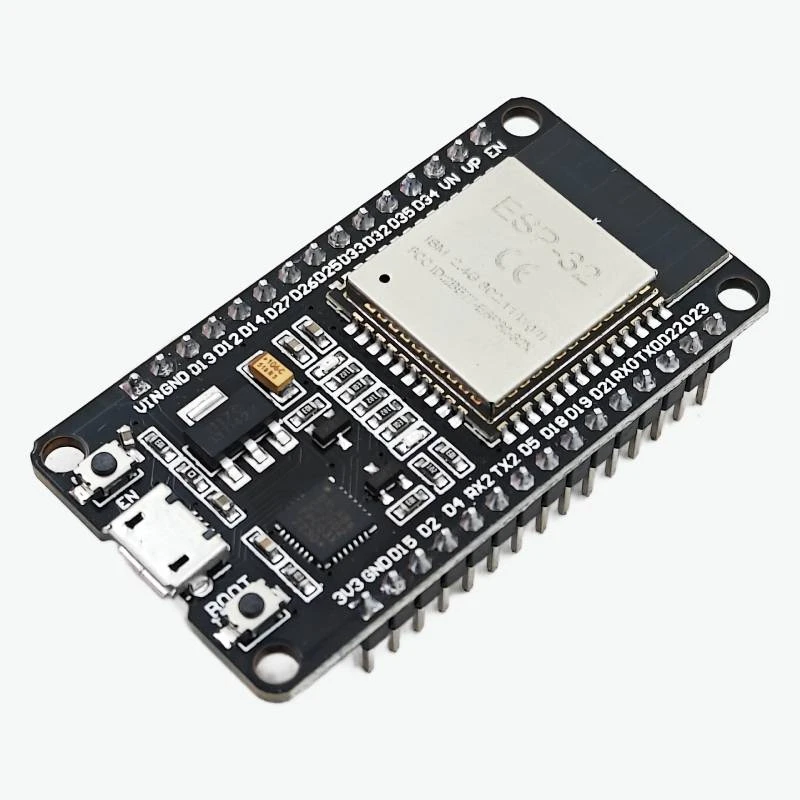
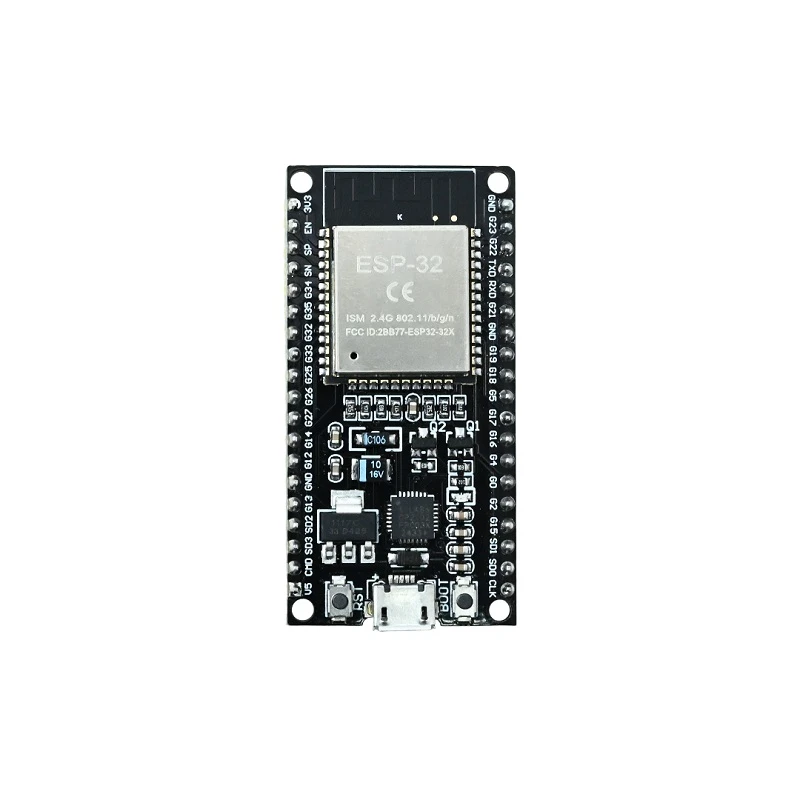
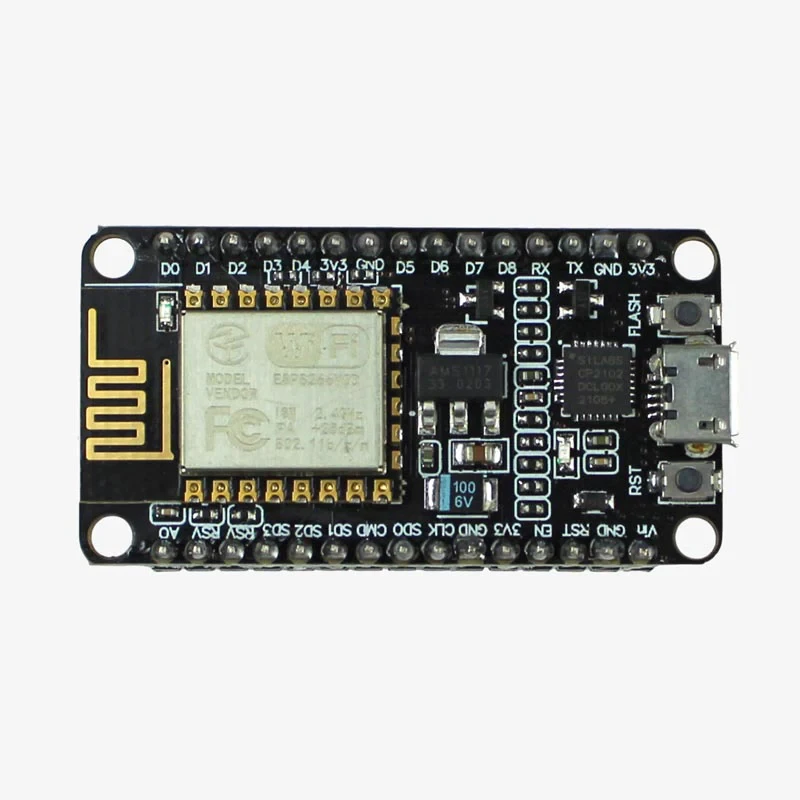
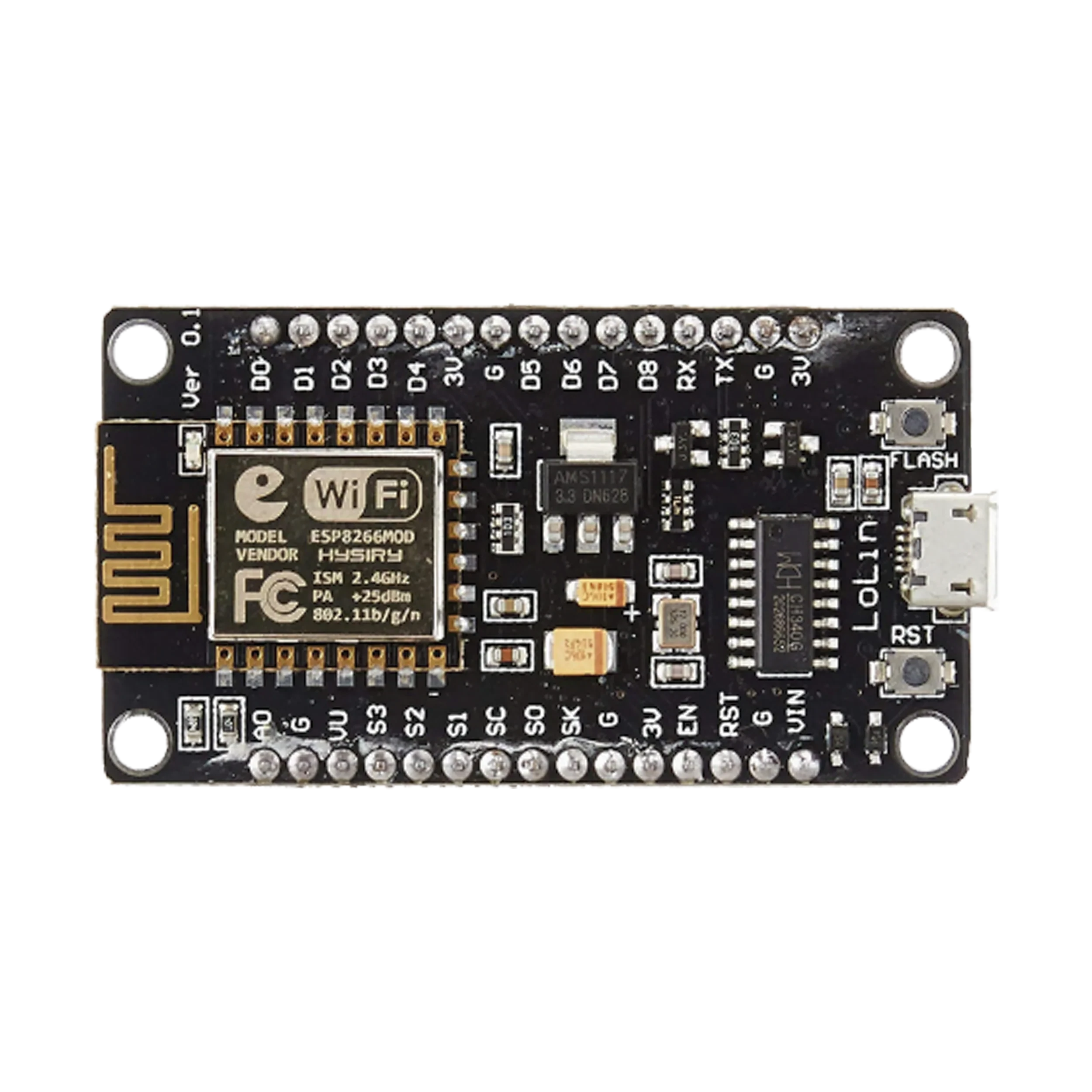
The NodeMCU ESP8266 is a compact microcontroller board with built-in Wi-Fi, based on the ESP8266 chip. It is ideal for IoT, smart home, robotics, and STEM learning projects. NodeMCU supports Lua scripting and Arduino IDE programming, making it beginner-friendly and highly versatile for embedded electronics.
Key Features
Microcontroller: ESP8266
Operating Voltage: 3.3 V (logic level)
Wi-Fi: 802.11 b/g/n, TCP/IP stack
USB Interface: Micro USB for programming and power
Memory: 32-bit microcontroller with flash memory
Compatible with Arduino IDE and NodeMCU Lua firmware
Breadboard-friendly with digital I/O and PWM
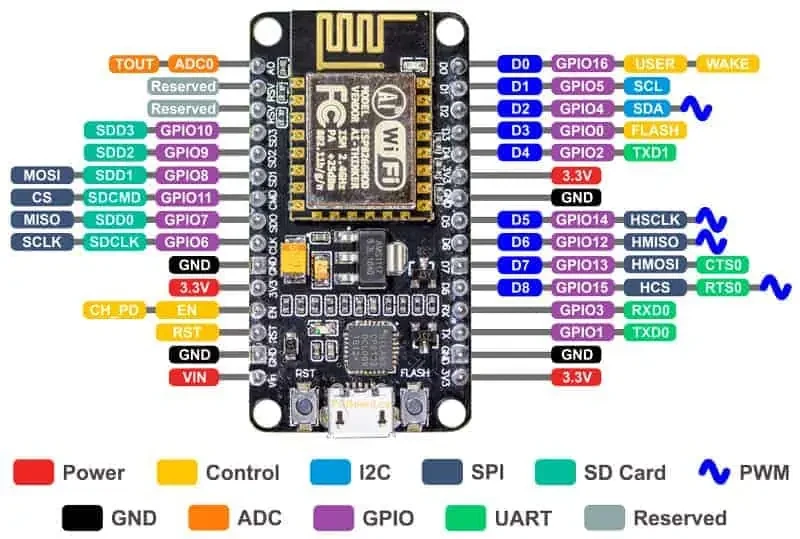
Supports I2C, SPI, UART, ADC interfaces
Technical Specifications
| Feature | Specification |
|---|---|
| Microcontroller | ESP8266 (Tensilica L106 32-bit) |
| Operating Voltage | 3.3 V |
| Input Voltage | 4.5–12 V via VIN pin |
| Digital I/O Pins | 11 (D0–D10, some multifunction) |
| PWM Channels | 10 |
| Analog Input Pins | 1 (ADC 0–1 V) |
| Flash Memory | 4 MB (common version) |
| SRAM | 80 KB |
| Clock Speed | 80 MHz (up to 160 MHz overclock possible) |
| Wi-Fi | 802.11 b/g/n, STA/AP/STA+AP modes |
| USB Interface | Micro USB for power and programming |
| Dimensions | ~48 × 25 mm |
Connectivity & Interfaces
Digital I/O: 0–3.3 V logic, GPIO pins D0–D10
UART (Serial): TX/RX for programming and communication
I2C: SDA/D1, SCL/D2
SPI: HSPI available on GPIO pins
ADC: Single-channel analog input (0–1 V)
PWM: Software PWM on multiple GPIOs
Applications
IoT projects with cloud connectivity
Smart home automation (lights, sensors, relays)
Wireless sensor monitoring
Robotics with Wi-Fi control
STEM labs for learning networking, sensors, and cloud integration

No review given yet!




You need to login to view this feature

This address will be removed from this list

 english